
Service — Dry Ice Cleaning
No water. No
chemicals.
No compromise.
Dry ice cleaning removes contamination that nothing else can touch — without a single drop of water, without chemicals, and without any risk to the surfaces being cleaned. Paul was the first detailer in the UK to offer it, in 2014.
First in the UK
Water used
0
Chemical residue left
0
Paul Dalton was the first detailer in the United Kingdom to use dry ice cleaning, in 2014. What is now becoming more widely known in the industry, Paul has been offering for over a decade.
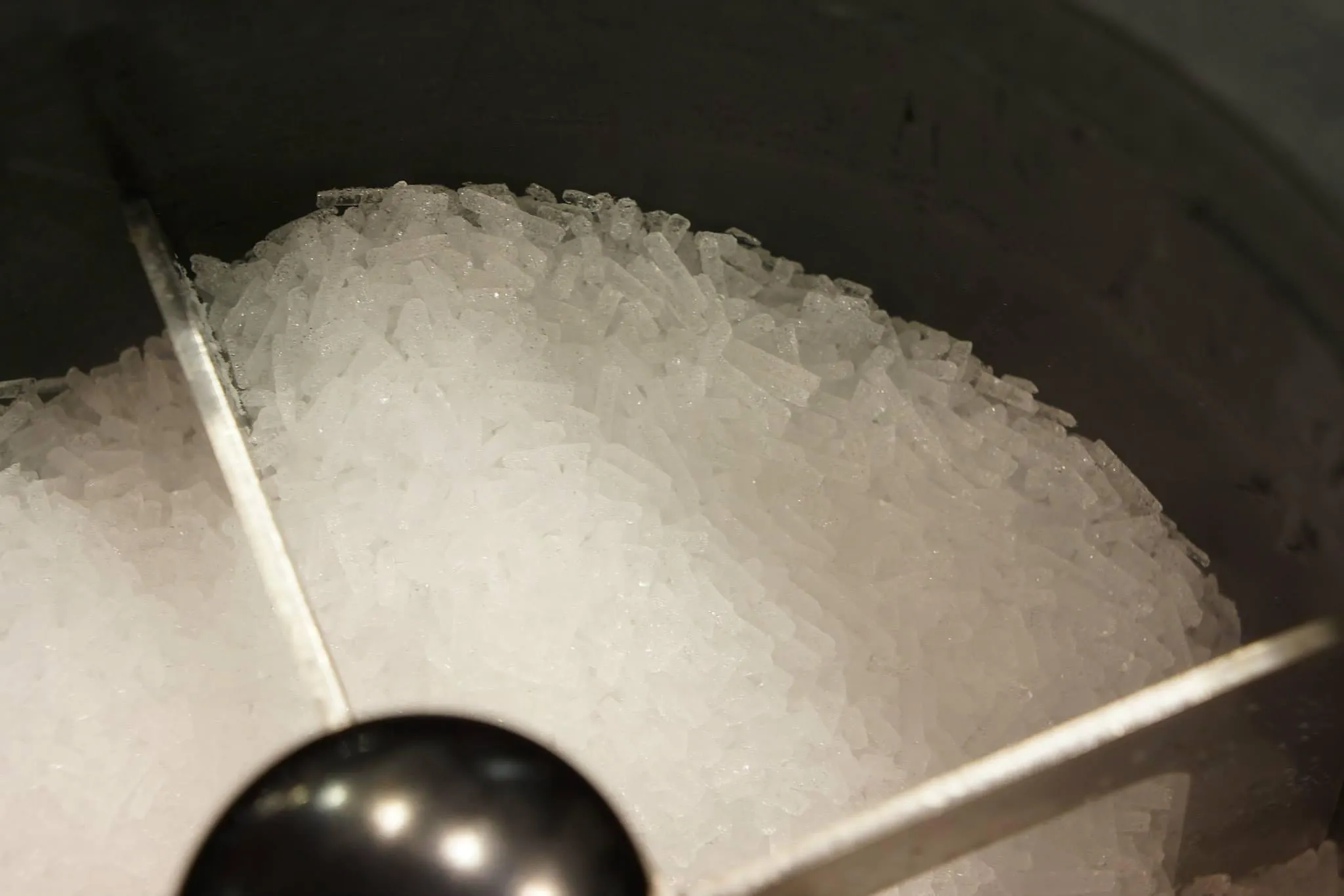
Dry ice pellets — solid CO2 at -78.5°C
What it actually is
The science behind
dry ice cleaning.
Dry ice cleaning uses solid carbon dioxide pellets — frozen CO2 at -78.5°C — accelerated at high speed through a specialised gun onto the surface being cleaned. Three things happen simultaneously, and together they achieve results nothing else can replicate.
First, kinetic energy. The pellets impact the surface at high velocity, breaking the bond between the contaminant and the surface beneath it.
Second, thermal shock. At -78.5°C, the pellets cause the contaminant to contract rapidly and become brittle, fracturing it away from the substrate.
Third, sublimation. Dry ice converts directly from solid to gas — it never becomes liquid. This means no moisture, no water damage to electronics or wiring, and zero residue. The contaminant is blasted away and the CO2 simply disappears into the air.
The result is a level of cleanliness that steam, pressure washing and chemical cleaning cannot achieve — in places those methods cannot safely reach.
Why it works
Three mechanisms.
One result nothing else achieves.
I
Kinetic Energy
Impact at high velocity
Dry ice pellets travelling at high speed physically dislodge contamination — grease, oil, road grime, underbody deposits — breaking its bond with the surface beneath without any abrasion or chemical action.
II
Thermal Shock
-78.5°C on contact
The extreme cold causes contaminants to contract rapidly, becoming brittle and fracturing away from the substrate. It reaches into crevices and gaps that brushes and cloths cannot access — removing deposits that have been there for years.
III
Sublimation
Solid to gas — no liquid
Dry ice skips the liquid phase entirely, converting directly from solid to gas. No moisture is introduced to the surface. No chemical residue is left behind. Wiring, electronics, sensors and delicate surfaces are completely safe.
Experience that matters
Over a decade ahead of the industry.
When Paul started using dry ice cleaning in 2014, it was virtually unknown in automotive detailing in the UK. There was no manual to follow, no training course to take. The learning came from doing — on some of the most valuable cars in private ownership.
First, kinetic energy. The pellets impact the surface at high velocity, breaking the bond between the contaminant and the surface beneath it.
A decade of experience working with this technology on engine bays, interiors, underbodies, restoration projects and concours-standard cars has produced a depth of knowledge about what dry ice cleaning can achieve — and how to use it correctly — that simply cannot be replicated quickly.
When Paul uses dry ice on your car, it’s being done by the person who has been doing it longer than almost anyone in the country.
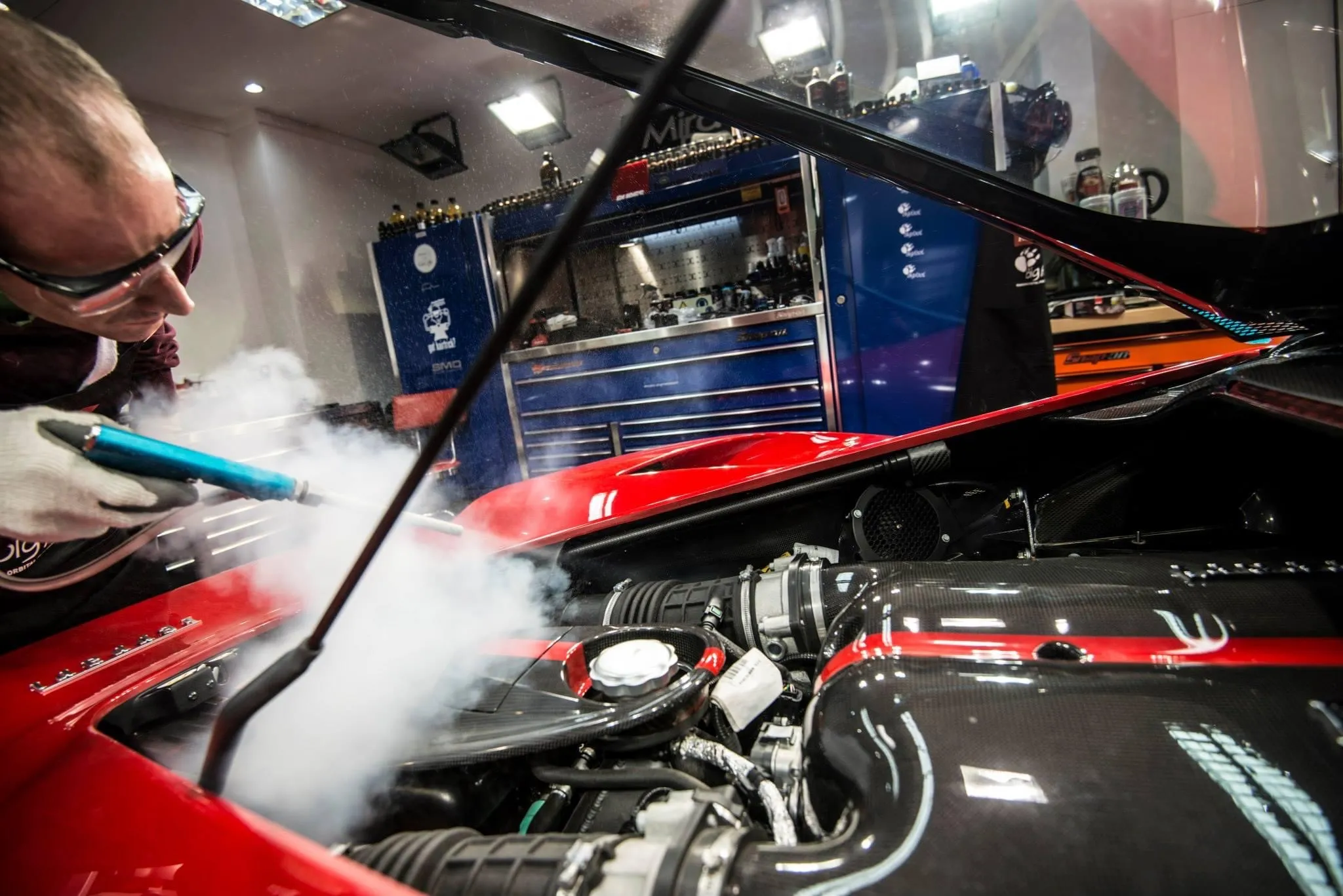
Paul Dalton — dry ice cleaning a Ferrari engine bay
Where dry ice cleaning is used
Every application
assessed individually.
Engine Bays
The most common application. Decades of oil, grease and grime removed without water touching a single sensor or electrical connector. Results that pressure washing can never safely achieve.
Underbody & Arches
Road tar, underseal, corrosion deposits and compacted grime blasted from suspension components, sills and wheel arches. Surfaces prepared for coating or inspection without compromise.
Interiors
Deep cleaning of door shuts, hinges, seals and interior panels. Removes ingrained dirt from areas that are impossible to reach with conventional cleaning methods.
Restoration Work
Removing old underseal, paint preparation, stripping contamination from restoration projects where chemical methods are inappropriate or damaging. Bespoke to every car and every requirement.
Dry ice cleaning — by the hour
£200+VAT
Per hour. Minimum of 2 hours.
Clean what nothing
else can reach.
Every dry ice cleaning job is assessed individually. Paul will tell you what’s achievable, what the process involves and what the result will look like — before any work begins.